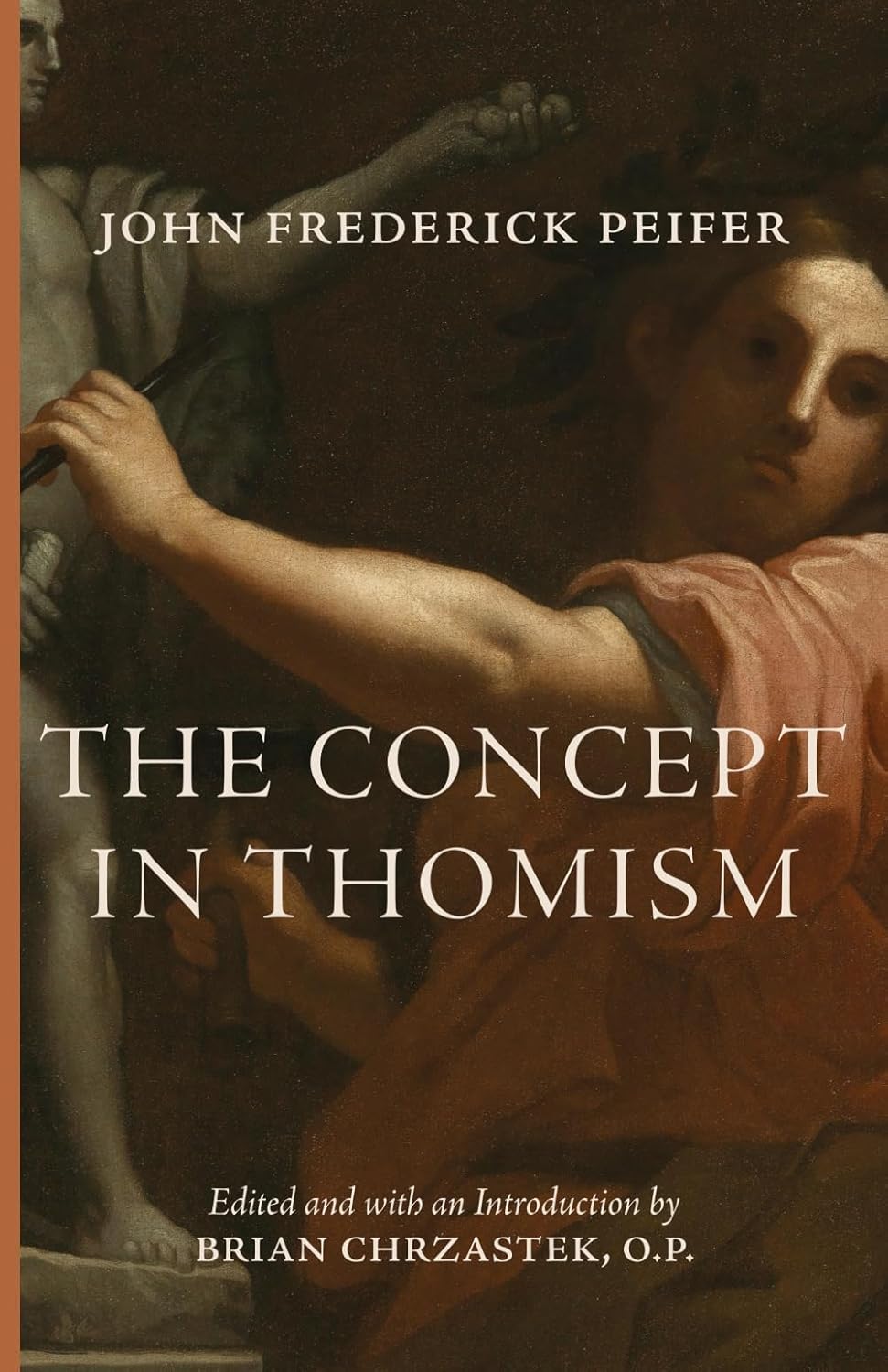

The Concept in Thomism
The Concept in Thomism
Paperback, 360 pages
Aristotle’s Metaphysics famously begins with the words: “All men by nature desire to know.” The scope of this simple assertion is immense. Its premises and its implications extend practically to the outermost limits of human thought, encompassing metaphysics, epistemology, anthropology, cosmology, and even aesthetics, and encroaching upon the domain of divinity. “All men by nature desire to know.” But what do, and can, they know? How do they know? How do they share it? How do they discern truth from falsehood? This is the problem of human knowledge; its solution serves as the key to any philosophical synthesis. The Concept in Thomism, originally published in 1952, gives the Thomistic account of knowledge and helpfully describes the Thomistic response to the various modern epistemological variations.
“That which the intellect first conceives as most known, and into which it resolves all other concepts, is being.” (St. thomas Aquinas, De veritate)
John Frederick Peifer anchors his study in Aquinas’s own writings as well as those of such figures from the Commentatorial Tradition as Thomas de Vio Cajetan and John of St. Thomas. Describing the impetus for his work, Peifer cites Pope Pius XII: the philosophy of Thomas Aquinas “safeguards the genuine validity of human knowledge, the unshakeable metaphysical principles of sufficient reason, causality, and finality, and finally the mind’s ability to attain certain and unchangeable truth.” The eighth volume in The Thomist Tradition Series, The Concept in Thomism shows that the door of human thought, far being from closed on itself, in fact opens upon the whole of reality.
Author
Peifer, John
Publisher
Cluny Media
Couldn't load pickup availability
ISBN/Code: 978-1685954437
View full details